
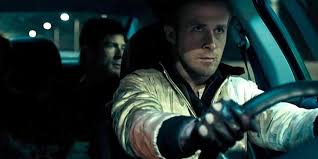
The concept of driving has been featured as a main method of transportation for characters such as the Driver in Nicolas Winding Refn’s Drive as well as Easy Rawlins in Devil in A Blue Dress. Specifically, the Driver uses transportation as a means for work such as being an auto mechanic, stunt man, race car driver, or the getaway car. Easy on the other hand uses his car as a means of transportation to get from one place to another. It’s intriguing, though, to not only look at their basic functions and uses for transportation but rather dig into the relating concept of identity.
The driver in Drive is defined by what he does, his occupations. Who he is as a person, is directly based on the skills he possess with his car. The driver constantly enacts in violent, dangerous tasks whether being a getaway car or stunt man. Audience members see this vicious, savage identity shine through, almost occupying the entirety of his character. Whether slapping a women, drowning, or torturing others, we see him almost always in this state of aggressiveness and danger. Although this identity he has in the car manifest who he is as a person, it’s fascinating to see that maybe this isn’t everything that he really is. After meeting Irene, audience members see a soft, innocent, sweet glimmer in his personality appear from time to time, developing the plot. For example, in a considerably memorable scene, the Driver takes Irene and Benicio through the LA River Channel. The music begins to swell, everyone’s smiling, and finally he is using his skill/power for good; for what he’s supposed to do. Sadly, this evil identity tied to driving, overtakes this innocent side he truly wishes to hold onto. Such as in the elevator scene after showing his most innocent side by kissing Irene, his most wicked side overrules as he crushes the skull of the man in the elevator. The reality is, as much as he wants to hold onto Irene and what she brings out in him, he can’t. He can’t protect Irene from the things he has to do or his image. Like the scorpion, he is destined, made, and built to just keep stinging.
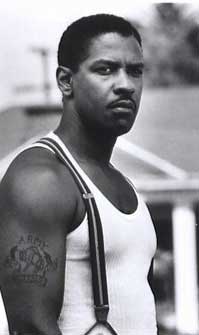
There is so much history to Easy Rawlins that audience members are unaware of outside the frame of the film. His mom died when he was eight and soon after, his father escaped lynching after a fight with a white man. Later in life, Easy served in U.S. Army during WWII. His entire life, he has fought, battled, and forced to use violence for survival. Yet, in Devil in A Blue Dress, Easy is an out-of-work African American, owning his own house, doing whatever he can to make a living. More than anything, he strives for his “innocent” side to rise where he can better himself and the life he lives. Contrasting to how the Driver’s main identity stemmed from the occupations he performed when driving, Easy’s identity was dictated in different environments when driving. In a specific scene when driving Daphne, once he entered the white neighborhood, he suddenly became more cautious, fearful, tense, made small movements, and hardly talked. When he was driving around his own neighborhood, he was relaxed, free, laughing, making big gestures, and playing around with his friends. For Easy, driving could be a means of freedom, escape, and happiness or it could be a life-or-death situation. He was an African American living in 1948 Los Angeles so in his reality, he was destined to face this obstacle-filled life. Similar to how the Driver wanted to be with Irene who brought out his innocence, Easy just wanted to better his life. Yet the roots of his violent past arose, again and again, as he never got a break.
In a sense, the aspect of driving is quite dehumanizing. One is defined by what he does, in his car, rather than who he actually is as a person. Yet, as we have seen through various films, this identity of “I drive” will always manifest itself and overpower the other aspects of what makes someone who they are.
 Alexis Livin' Life in Los Angeles