
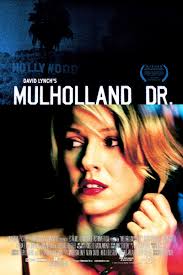
Due to Director Lynch’s decision of weaving different genres and themes into the film, Mulholland Drive ignited into a work of postmodernism. Specifically considering the use of hyperreality, a core element to postmodernism, the entirety of the plot exemplified what it means to incorporate exaggerated realism.
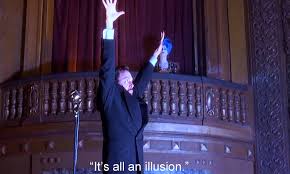
At first glance, the plot appears to be following the story of an aspiring actress, Betty Olms, as she migrates to California while befriending Rita. Yet as viewers are absorbed into their lives, elements of exaggerated realism, dreaming, and unstable psychological states begin to appear. Such as Rita awakens in the middle of the night speaking “silencio”, which leads the two to Club Silencio. The magician onstage constantly points out that the sounds heard are artificially constructed; everything we see is fake. The singer, for example, was emotionally belting out a beautiful piece when suddenly falls to the ground, yet the music continues. Nothing about this scenario is existent rather it is all fabricated. What’s interesting though, is that this scene is not randomly incorporated as a means to simply maximize the plot with no true intent. The magician proposes that illusions are an attempt to emotionally trick the audience and trigger emotional response that we consciously choose to fall for. In Mulholland Drive, Diane Selwyn is dreaming this experience in Club Silencio but as well as the bulk of the plot. She allows herself to plummet into this false reality of living as this blossoming actor, Betty, who is getting casted, succeeding, all while being in a romantic relationship with gorgeous Rita. Specifically for Dianne, the Club Silencio scene is the process of the magician’s message starting to arise into her conscious. Audience members notice this as Betty and Rita tightly grasps onto each each other, holding on for ‘dear life’.
Watching them clench their bodies toward one another in fear, resembles Diane’s vast effort of holding onto this wishful dream world. It is finally a wake up call that she has been reconstructing an artificial life of optimism and success while consciously trying to suppress the fact that this isn’t real.
Fascinating though, the magicians speech is directed not just toward Betty, containing significance to the plot, but to us as well. The audience is fully aware that the different scenes we have been viewing are not real, can’t be real, yet after allowing our emotions to take over, we immerse ourselves into the plot and fall for what we are watching. We feel on edge when noticing the blue hair lady sitting in the balcony of the theatre and our hearts drop as Betty begins to seizure with uncontrollable shaking. Although it’s just a movie and this scene is referring to a dream, the illusion takes over and we let ourselves worry, cry, smile, question, and feel as the plot progresses.
At Club Silencio, we are reminded, as the magician speaks, “It is all an illusion”.
In addition to the Club Silencio scene, hyperrealism is seen consistently throughout the entirety of the film. Whether the cowboy, blue key, bum, Betty’s audition, assasintation of three guys in the motel, or at Winkies, each scene contains an incredible amount of significance and connection to this unconscious dream of living in this artificially constructed world. This use of hyperrealism is what allows audience to view Los Angeles as this distinctly postmodern city.
 Alexis Livin' Life in Los Angeles